Today’s mission is all about training your eye to recognize quality AI-driven images—and learning to separate true design from quick cash-grab graphics. AI artwork is everywhere right now, and while it can be an incredible tool, not every image being sold online is created with care. Case in point: the hat I proudly made and placed on my sales table for three shows in a row—before I finally realized the word “Pickleball” was missing the L. It read “Pickeball Social Club,” and not one single person (including me!) caught it until much later. That tiny AI-generated oversight turned into a great reminder: always inspect your designs carefully.
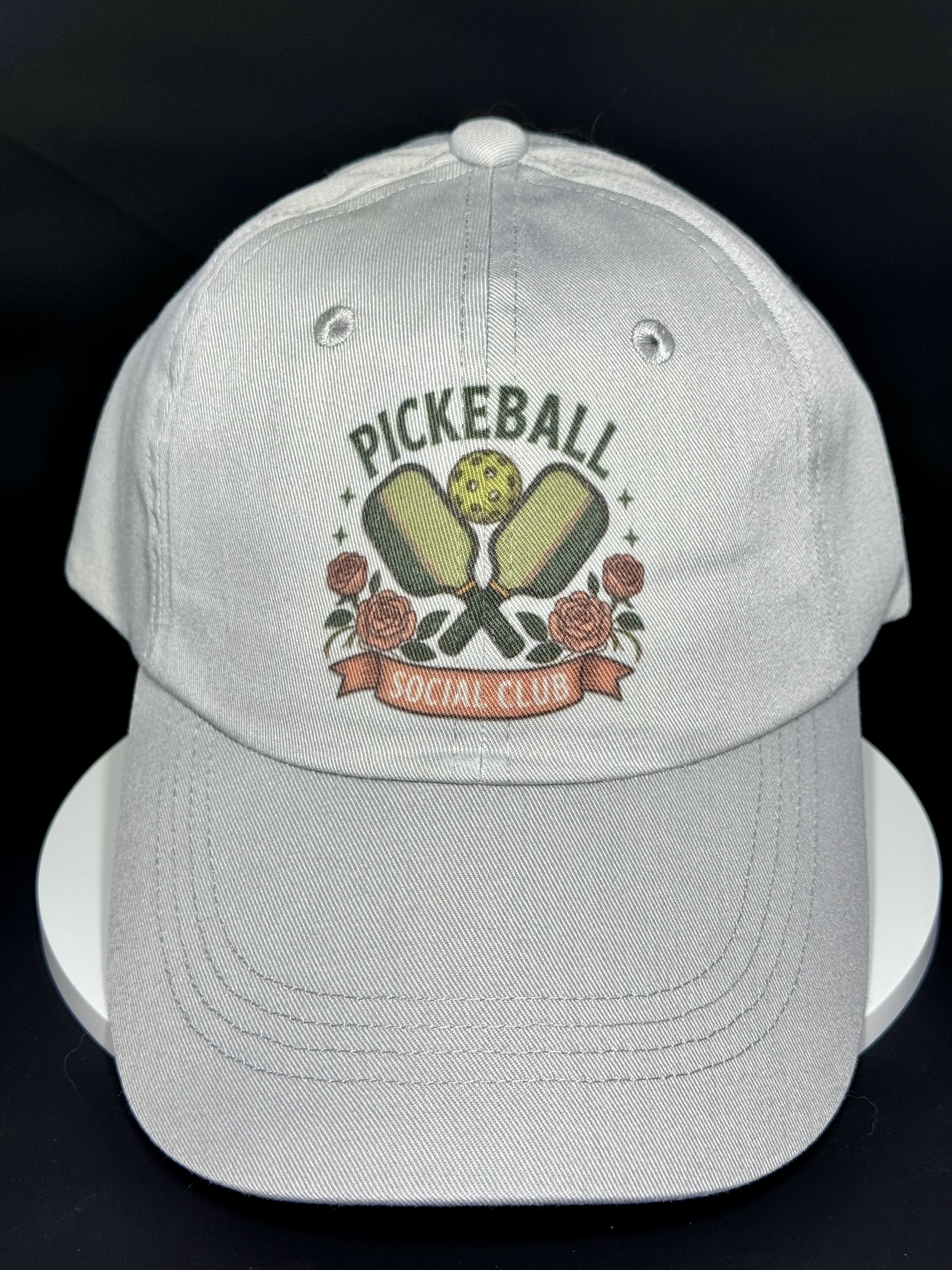
The hat itself is lovely—soft gray fabric with a calm, neutral vibe and a charming crest-style design featuring paddles, a pickleball, and roses wrapped in a banner. At a glance, it looks completely polished and professional, which is exactly how lower-quality AI designs sneak past us. Typos. Warped shapes. Misaligned details. Unnatural hands or lettering that trails off. These “almost right” elements are the biggest giveaways that an image was rushed or never reviewed by a real designer.
Here are a few tips to spot poor AI images:
• Zoom in on text—AI will often distort lettering or misspell words.
• Look for balance—shadows, spacing, and proportions should feel natural.
• Watch for repeated or melted shapes—like leaves or stitching that doesn’t quite make sense.
• Ask yourself: does it feel hand-designed or auto-generated?
And if you want to create your own AI images the right way, start small. Learn the basics of prompting. Get comfortable revising. Always proof—twice. Treat AI as a sketch partner, not a shortcut. The more intentional you are, the more your work will stand apart from mass-produced designs that exist only to make a quick dollar.
So today’s challenge is this:
Take one design—yours or someone else’s—and really study it. Look for the little details. Train your eye. And remember—sometimes even the best of us sell a “Pickeball” hat before we learn the lesson.
Growth is in the noticing.