Designing Tables and Work Areas That Truly Work for You
Step 5 is where your craft room begins to gain personality and purpose. Work surfaces are far more than just tables and benches. They shape your comfort, your workflow, your efficiency, and even your creativity. Choosing them wisely ensures that your workspace supports the way you naturally move and create rather than forcing you to work around limitations. Today’s mission is to dive deep into what makes a work surface functional, durable, and perfectly matched to the type of crafting you do.
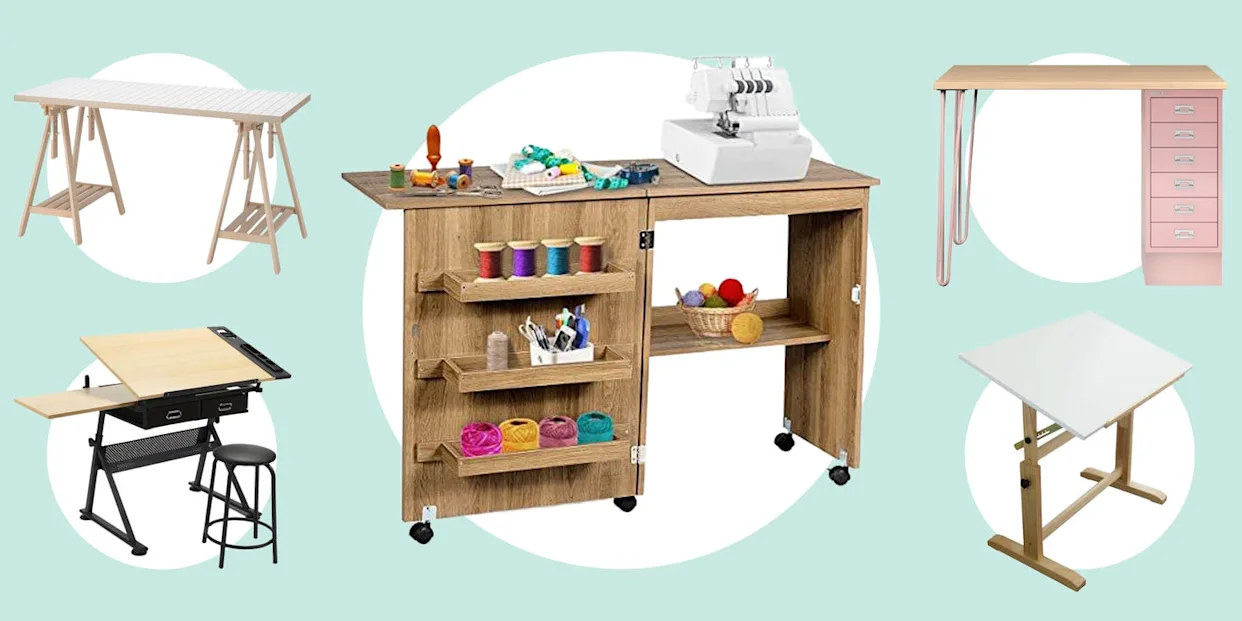
Standing Height Surfaces
Taller work surfaces are wonderful for active tasks that require frequent movement or larger motions. A table around counter height allows you to cut materials, assemble projects, prepare heat press blanks, and manage larger pieces without bending over or straining your back. This height encourages natural posture and makes it easier to apply even pressure when working with tools or materials that need consistent force.
When choosing a standing height table, focus on durability and stability. The table should not shift or wobble when leaned on. Consider how much weight the surface will hold, especially if you regularly work with larger sheets of material or equipment. Standing surfaces often become your most used spots during busy crafting days, so think about where this table will live in your layout and how easily you can pivot from it to other workstations.
Tips and techniques:
• Look for surfaces with a smooth and easy to clean top that can handle adhesive, paint, and cutting without damage.
• Place standing workstations near tools that require frequent setup or movement to streamline your workflow.
Standard Desk Height Surfaces
Precision work thrives at a traditional desk height. Seated crafting allows for steady hands, more control, and less fatigue during intricate tasks. This height is ideal for detail painting, paper crafting, weeding tiny designs, computer based design work, and assembly tasks that require focus.
Comfort becomes a major priority here. An ergonomic chair can completely change your experience during long crafting sessions. Support for your back, adjustable height, and proper alignment with the table surface all help you avoid fatigue and strain. Desk height tables should offer enough space to spread out supplies without feeling crowded. If you use machines that require seated operation, ensure your chair height and table height pair well together.
Tips and techniques:
• Choose a table with drawers or nearby storage to keep essential small tools within easy reach.
• Consider a surface with a light neutral color so your project pieces are easy to see and contrast effectively.
Heavy Duty Surfaces for Tools and Machines
Some machines demand much more from your work tables. Equipment that vibrates or applies pressure during operation needs a solid and stable foundation. A wobbly table can affect performance, accuracy, and even safety. Heavy duty tables made from metal or solid wood absorb movement better and help keep your machine running smoothly.
Think about where your heavier tools will permanently live. It is often easier to design your layout around them since moving them frequently can be challenging. Ensure the table is deep enough to support the full footprint of the machine with room behind it for cords or ventilation if needed. Stability is the goal and choosing the right type of table prevents long term headaches.
Tips and techniques:
• Test the table by gently pushing on it from different angles to make sure it does not shift.
• Keep heavy machines closest to outlets so cords remain organized and safe.
Comfort Additions for Long Crafting Sessions
Your craft room should support both productivity and comfort. Anti fatigue mats placed at standing stations can greatly reduce pressure on your feet and lower back. They are particularly helpful during long cutting sessions or when preparing materials. For seated areas, ergonomic chairs create a healthy posture that keeps your body from tiring prematurely.
These comfort items are not luxuries. They are tools that allow you to craft longer, more comfortably, and with better focus. When planning where your tables will go, take a moment to note where mats or chairs will live and ensure there is enough room for you to move naturally without obstruction.
Mapping Your Work Surface Layout
Once you have chosen the types of work surfaces you need, it is time to sketch their placement into your room layout. This step gives clarity and prevents clutter later. Think of your workflow like a path. Where do tasks begin and where do they end. How can you move from machine to table to finishing area without backtracking or crossing over yourself.
Your sketch does not need to be perfect. It simply needs to help you visualize a space that feels comfortable and efficient. Place standing height surfaces where movement is frequent. Place seated areas where focus is required. Keep heavy duty tables in accessible but stable spots.
Your mission today is to evaluate your workspaces with fresh eyes. Consider each table or bench not just for what it is but for how it serves your craft. The right surfaces can transform your room into a place where ideas flow effortlessly and every task feels natural. Thoughtful planning today builds the foundation for a room that supports you through countless creative projects ahead.

