Today’s mission invites you to step into the magical world of layered storytelling—through shadow boxes. Whether you’re working with a LOKLiK cutting machine or another popular cutter, your goal is to design and build a dimensional scene that uses thoughtful sizing, layering, and spacing to create real visual impact. Start by choosing a frame size that pairs well with your machine’s cutting capacity. For most LOKLiK models and comparable machines, 8x8 and 9x9 frames are ideal because the cut layers fit beautifully within standard cutting mats, while still allowing enough room for multiple layers. If your machine supports larger formats, consider 10x10 or even 12x12 frames for extra drama—but be mindful that every increase in size means rethinking proportions, cardstock weight, and adhesive choices.
As you design, think in layers—foreground, midground, and background. This is where spacers come in. Foam tape is the most accessible spacer and works wonderfully for subtle depth between layers. For more defined spacing, chipboard strips or pre-cut foam squares allow you to create consistent distances. If you really want to elevate your design, try stacking foam tape or mixing materials—thicker foam toward the front and thinner spacing toward the back—to create a gradual sense of depth rather than equal spacing throughout. Just be mindful of overall frame depth so your glass doesn’t press into the front layer.
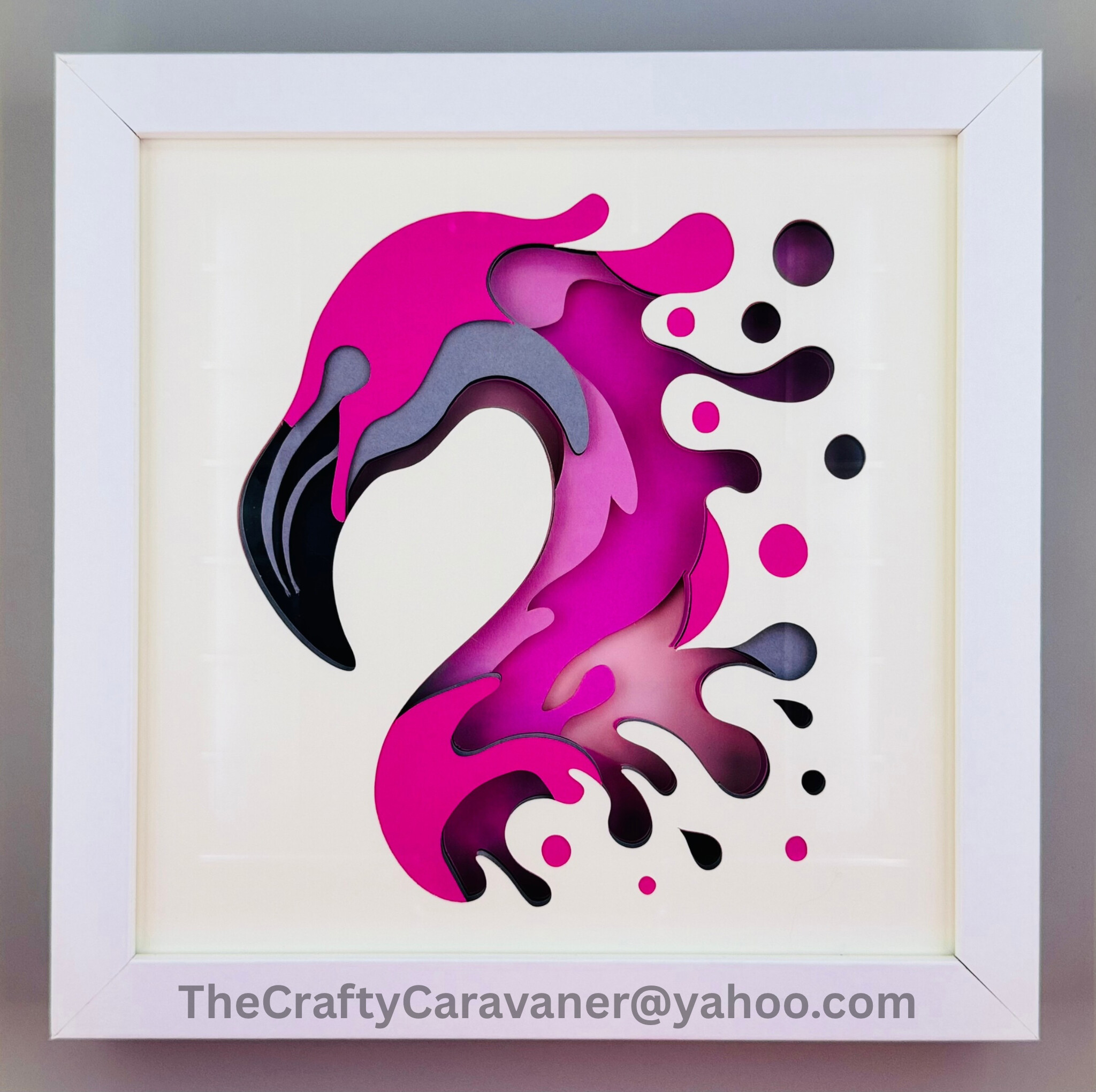
Frame selection matters more than many realize. Look for deep profile frames—often called “shadow box frames”—with at least 1–1.5 inches of interior depth. This allows your artwork to breathe and prevents flattened layers. Neutral frame colors like black, white, or natural wood tend to let the artwork shine, but don’t be afraid to coordinate frame tones with your design palette. Before sealing everything in, test your composition upright under lighting—you’ll see how shadows fall, and this is where the magic happens.
Your mission is to design with intention. Think about how every cutout adds to the story. Use heavier cardstock for front layers to anchor the piece visually, and lighter cardstock or vellum in the background to soften the look. Consider contrast, color layering, and negative space. And most importantly—experiment. Try different spacer thicknesses, frame sizes, and layer counts until you find the sweet spot that feels uniquely yours.
When you’re done, step back and admire not just a craft project, but a tiny world you built—layer by thoughtful layer.