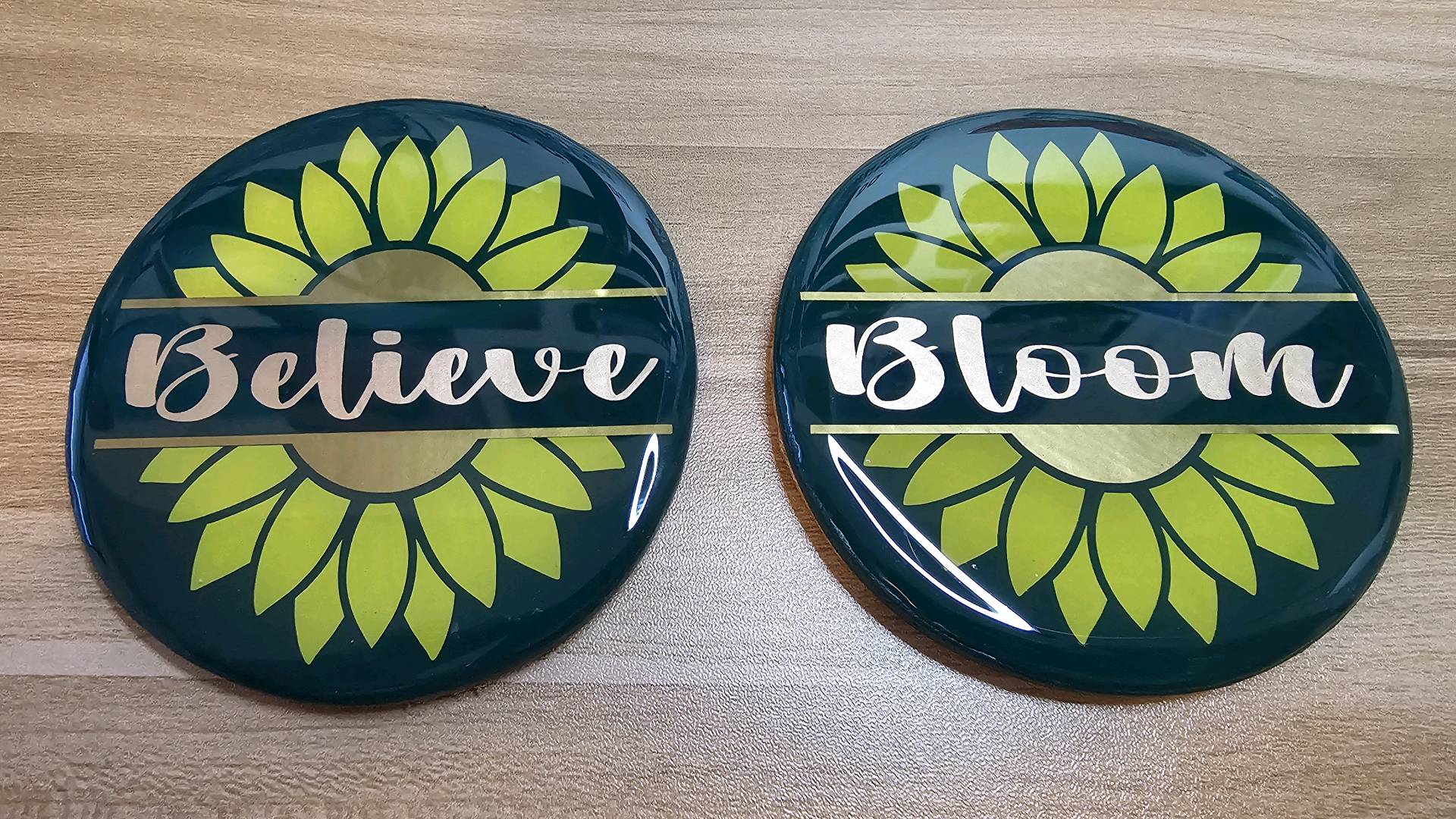
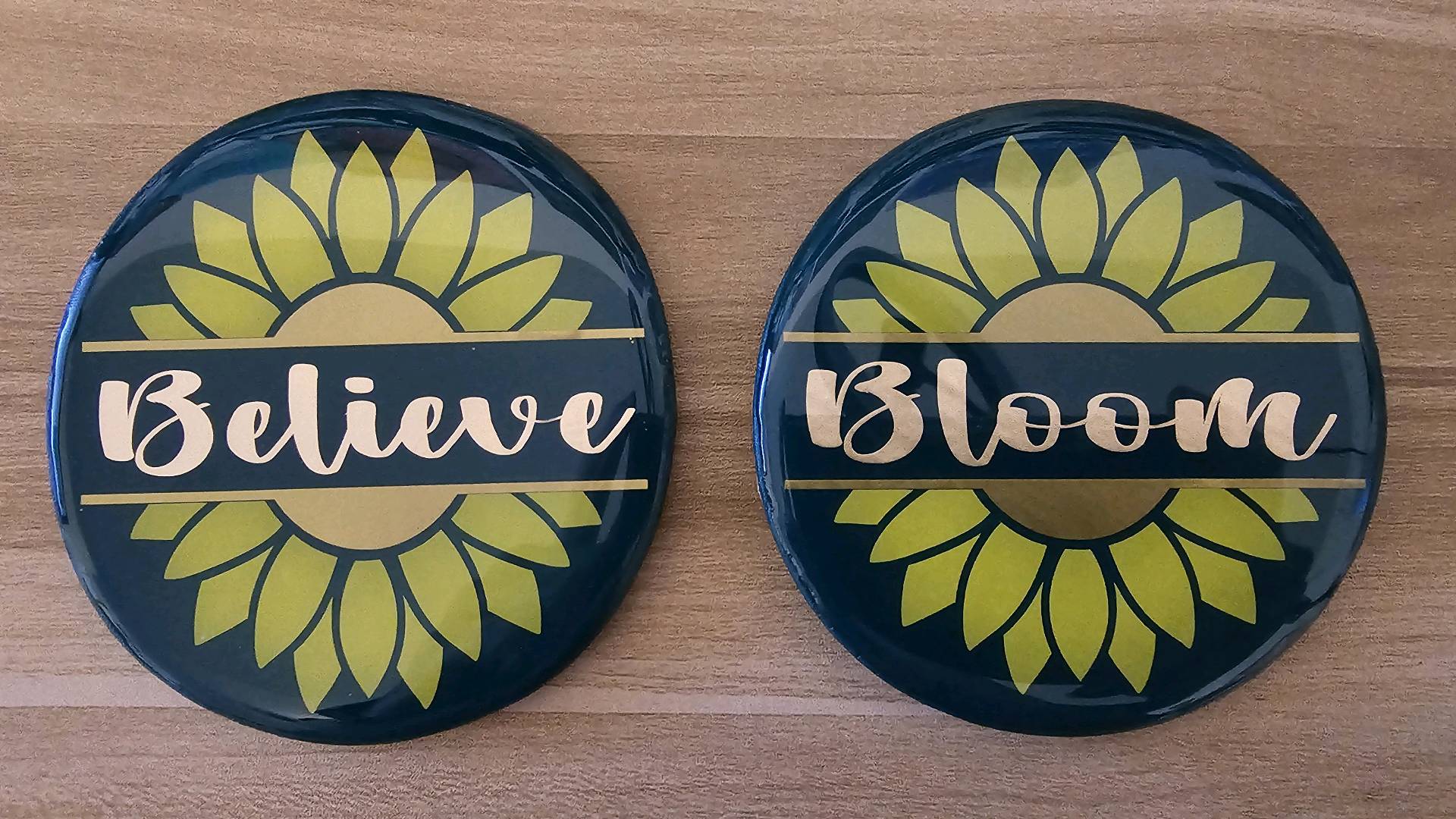
For this set, I wanted to create handmade coasters that felt warm, uplifting, and full of personality. I started by shaping each base from air‑dry clay and letting them fully cure. Once they were ready, I painted the surfaces with acrylics to build the deep turquoise green background and bright sunflower petals.
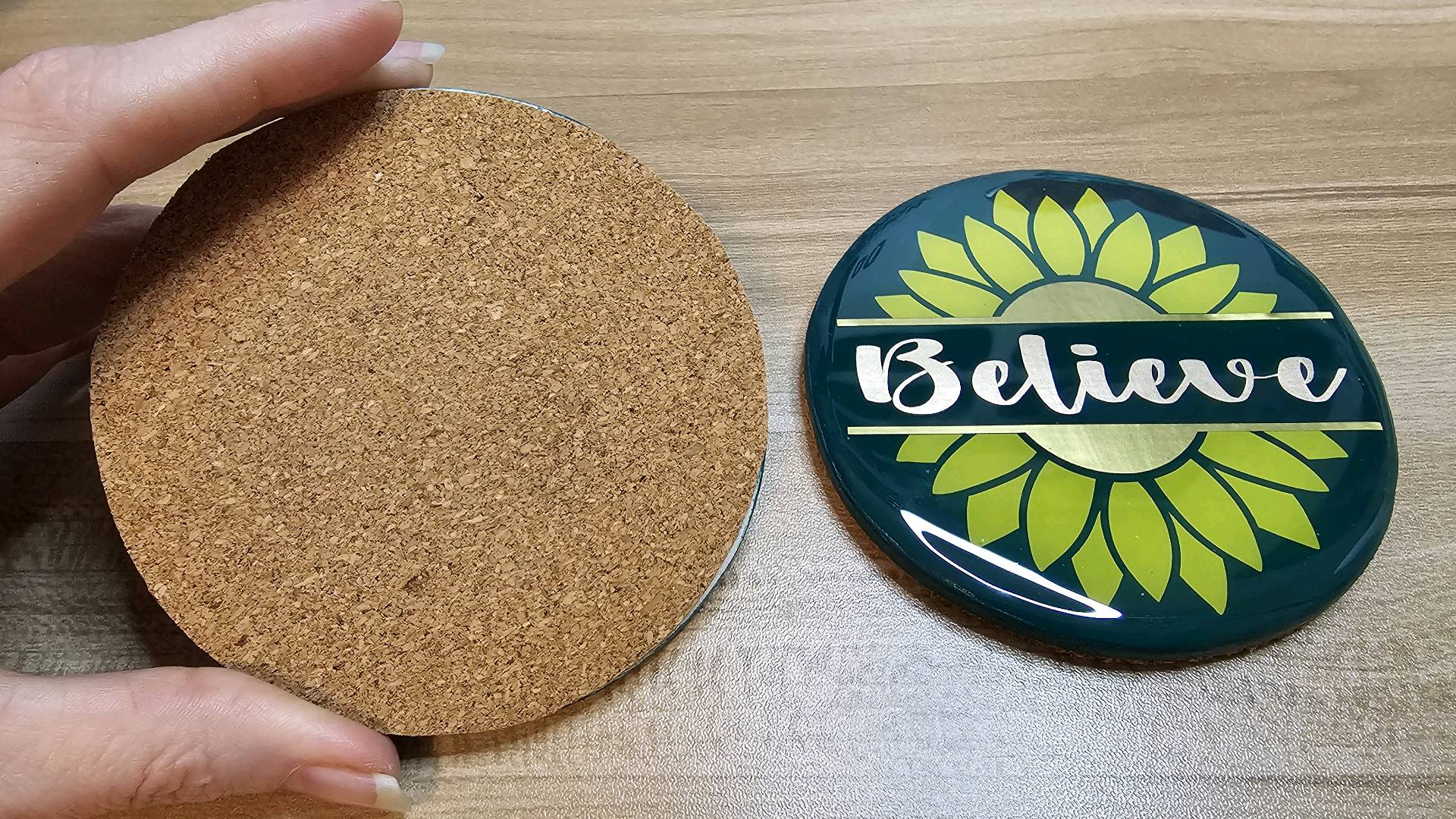
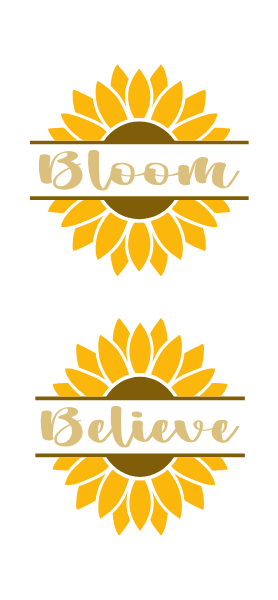
Using my Loklik Crafter, I cut the sunflower overlays and the words “Bloom” and “Believe” from HTVRONT adhesive vinyl. After applying the vinyl with transfer tape, I sealed each coaster with a smooth layer of epoxy resin to protect the artwork and give it a glossy finish. The backs are lined with adhesive cork sheet to keep them from slipping and to add a clean, finished look.
These two are the first in a four‑piece set — I’m currently working on the next two matching designs and will be sharing those soon.
Materials Used:
Air‑dry clay (coaster bases)
3mm pottery rolling guides (for rolling out a consistent thickness of clay)
Thank you! Yes, resin makes everything pop! I’m so proud of myself for not touching them, before they were fully cured, and leaving my fingerprints on them.
Thank you! As long as you don’t over pour it will pretty much stick to the top edges. However, I poured a little too much on one of them, so it spilled over. Or if you even touch the side with a little resin to where it can come in contact with the resin, the resin will automatically attached to it and follow that flow right off the surface. It’s best to line the edges with a thin line, first, then pour inward. I like to use a spatula to push it close to the edge, and pour a little at a time, all while using the spatula to spread it out evenly. I really don’t know how I over poured the one. It could’ve had a rounded edge in that spot and that’s why it chose to run off. I used a pipette to suck up the overflow resin and put it into the pendant molds I was using for the leftovers. But yeah, it domes on its own, really.
 I’m happy you think so!


