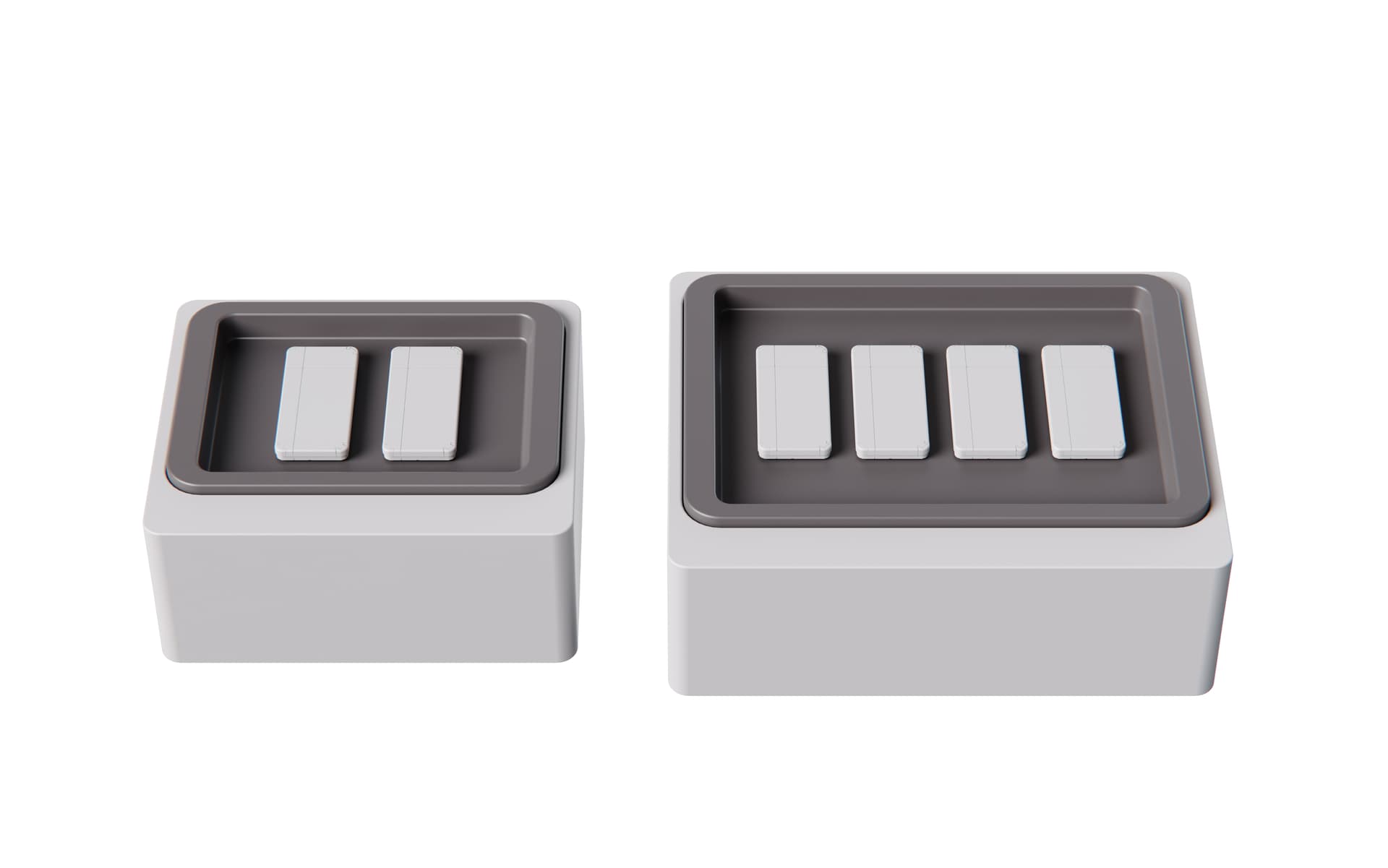
We’re exploring the idea of a Multi-Station Phone Case Heat Press (e.g., 2-station or 4-station), and we’d love to hear your thoughts, would this be something you’d be interested in?
Please take a moment to vote below (choose one option), and feel free to share why you picked it in the comments. Your feedback will help us understand what you really need.
Poll Time
We’re exploring a multi-station phone case heat press, which setup fits you best?
2-station (press 2 cases at once )
4-station (press 4 cases at once)
No need — the current single-station machine is enough for me
Step2: Interview
If selected, you’ll be invited to join a 30–40 minute online discussion with our UX Research Team. As a thank-you for your time, you’ll receive a $20 appreciation bonus after completing the interview.
Every insight counts, every idea builds the future.
Well, I’ve never done phone cases, so I’m not sure if my vote would be helpful. If I did, I think a 4 phone case press would be very handy, especially for those who receive phone case orders pretty regularly. I also think that a 2 phone case press would be useful for those who don’t receive as many phone case orders, but still get them on the regular. With that being said, I think, it would be nice to have the option to choose from all 3 machines.
We’ll see here is the thing. These are vacuum sealed and so it is likely having more than two would mean mass production of the same material or designs because how can you control the film during the seal
Initially I chose 4 slots but went back and changed to a two slot. My reason for the change is because I feel you’d waste more film by having to a 4 slot if you didn’t need to print as many. If sales decline you may go through periods without needing to print as many cases. However, when preparing for events for example you may need the ablility to print larger quantities. You will need to be able to make less if you need to. It would also be helpful if there was a way for the software to be able to allow for you to print multiple designs on one sheet and press them at once. My question would be if the vacum seal would protect unused slots if slots using diffent design from ink spilling from one slot to the other. These are just some of the features I would have questions about to get the most value and least overhead cost when deciding which size machine would be best for me. It would also be great if its lightweight enough to take to sales events.
I don’t think it would be a success to press more than one phone case as the ink on the paoer expands at the outer sides and i find it would be tricky to get them all pressed successfully . Also I don’t think it is much needed like mug press for example i get orders of 2 to 10 mugs for a customer and that wiuld be useful to press more than one at a time but with the phone case press i don’t think it will be necessary .
Both machines have their appeal, but each comes with its own set of advantages and drawbacks.
Pros
Ability to press multiple phone cases at once, reducing material waste.
Larger pressing area, allowing you to work on more items in a single run.
Potential for interchangeable plates, making it possible to produce a wider variety of products with one machine.
More cost‑effective overall. Right now, one A4 film sheet is used per phone case, but with a two‑case setup you could fit two cases on a single A4 sheet.
Flexibility to press different types of phone cases and designs at the same time.
Cons
Requires film larger than A4, and most people don’t have access to an A3 sublimation printer.
Because the machine relies on vacuum technology, the film’s behavior can be unpredictable. For example, when pressing three badges at once, the film reacted differently each time.
The illustration looks nice but isn’t realistic—there would need to be much larger gaps between plates for the film to form properly.
It becomes inefficient if you only need to press one phone case or a single item.
Additional Idea
Another concept would be to place each phone‑case mold inside its own sealed compartment, arranged in a four‑square layout. This way, you could press just one case when needed—such as for a single order or a test—without wasting material.
These compartments could be modular, allowing you to swap them out depending on what you’re pressing. For example, two sections could hold phone‑case molds, while the others could be used for badges or coasters.
This setup would also remove the need for A3 film sheets. Instead, you could use two A4 sheets—one on top and one on the bottom—making the process more accessible and efficient.
Thank you for everyone sharing so many thoughtful ideas! Just curious: For a 2-station machine, which film size would you prefer, A4 or A3?
And if a 4-station version requires A3 film, would you be willing to buy/use an A3 sublimation printer? (I know many of us currently use A4 sublimation printers.) Why or why not?
I have never used a press for cell phone covers, but I think it would depend on productivity. I know that some people would be happy with one station, but there would also be companies that would be satisfied with four because it would reduce their production time. It’s all 50/50 because for some it would be too much and for others it would be perfect either way. It’s so complex to decide that we would get stuck in a loop. My final view is that there should be several options and that the customer should decide which one to buy, or that there should be modules that can be installed on the main head. For example, in my business, we have an all-in-one press that sublimates plates, glasses, caps, mugs, and T-shirts, and although I hardly ever use sublimation, it is functional because I connect all the other modules to the main head to do other things. This issue will always be complex.
A4 is more practical but A3 is very expensive and if the person already have an a4 printer hw wouldn’t bother buying A3 just for one machine that already has a version that can work A4 size.
It is not worth the costs unless if we have a minimum 50 phone case order per month wich is almost impossible lol
I kind of thought that as well. But if they were to design a new machine to press two or more cases at once, I would think they would also design a different template in idea studio. Now if that would let you choose between different phone cases for each press or limit it to one is the big question.
I’d personally stick with A4 for a 2‑station machine since it’s what most of us already use, and it keeps things simple and affordable. For a 4‑station setup, I can see why A3 might be necessary, but I’d only move to an A3 sublimation printer if the workflow benefits were genuinely worth the extra cost, space, and ink usage. Also, if I had the orders to pack up the cost of the new A3 printer I’d consider upgrading. But right now, I’d rather stay with A4 since it’s more accessible buying A4 sublimation supplies and fits better into my home setup.
I don’t personally own a phone heat press, but I’m familiar with the layout and functionality, so I can share a few thoughts. I agree with what several members have already mentioned: a 2‑in‑1 multifunction press is more than enough for most crafters, especially when you consider the typical film sizes and the sublimation printers many of us already use in our craft rooms. On the other hand, a 4‑in‑1 setup can be a great option for anyone running a business or handling bulk orders, since it speeds up production and adds convenience.
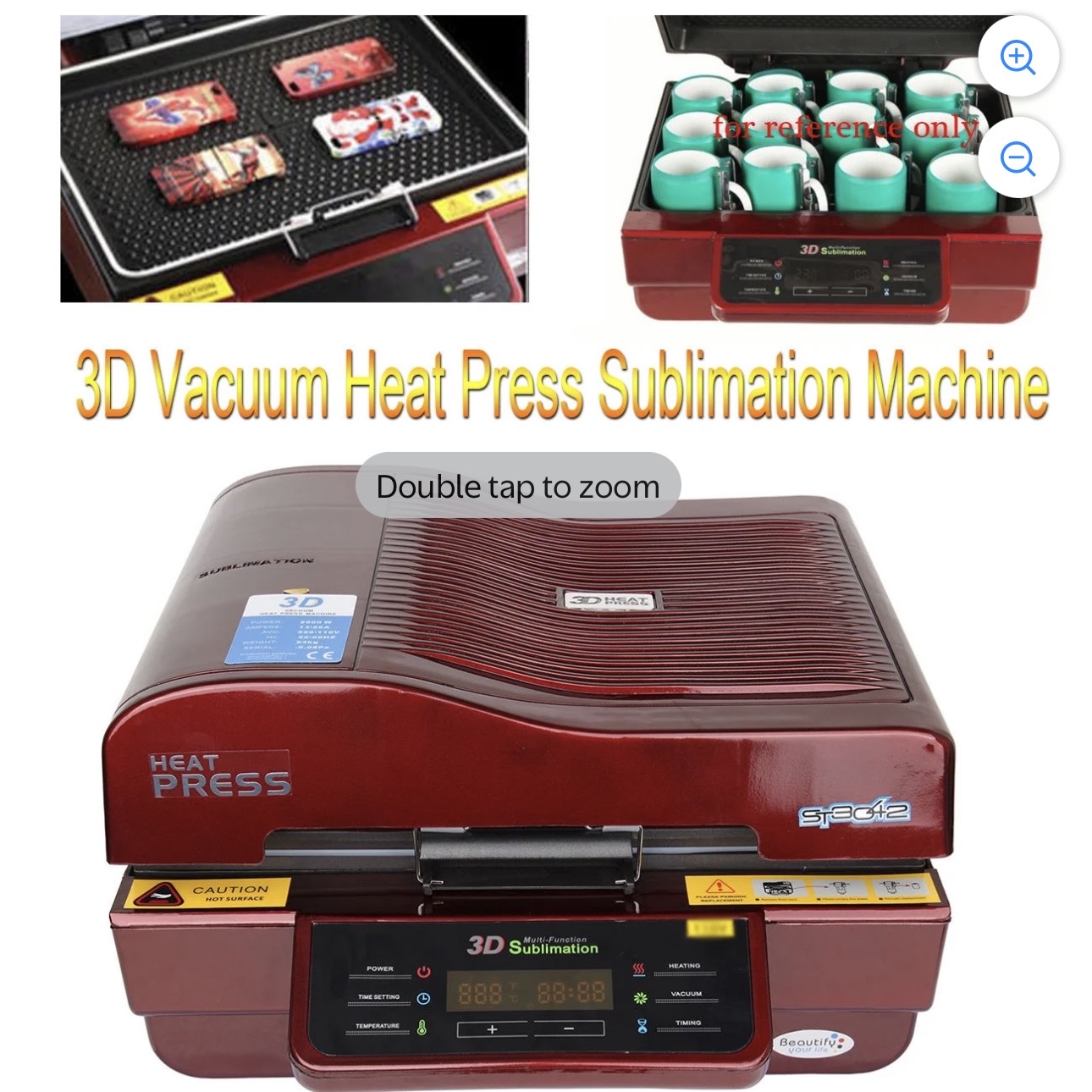
I also wanted to share this 3D Sublimation Heat Press I recently came across. The technology, layout, and overall design really impressed me. Instead of relying on expensive sublimation film, it uses sublimation paper, which significantly cuts material costs. If HTVRONT ever incorporates this kind of technology into future phone heat presses—regardless of size—it could really help crafters save money and increase their profit margins
That’s a pretty cool machine. The suction film is part of the machine, although she didn’t protect it with butchers’ paper and all the sub ink got all over it. Can’t believe that was 8 years ago.
@BellethehowtoGuru , I know, right??!! I was amazed at first there’s gonna be additional improvement on the user’s side to protect the machine from getting ink like you mentioned. If they will come up to this kind of 3D Heat press that does a lots of things in one machine, I bet a lot of makers will going to invest especially if they get a lots of orders in their location.
I don’t know already there’s an issue with ghosting on the sides. I’ve seen a lot of issues only thing I could think is two rising compartments so we can lift one side at a time.


Poll Time
Interview Invite