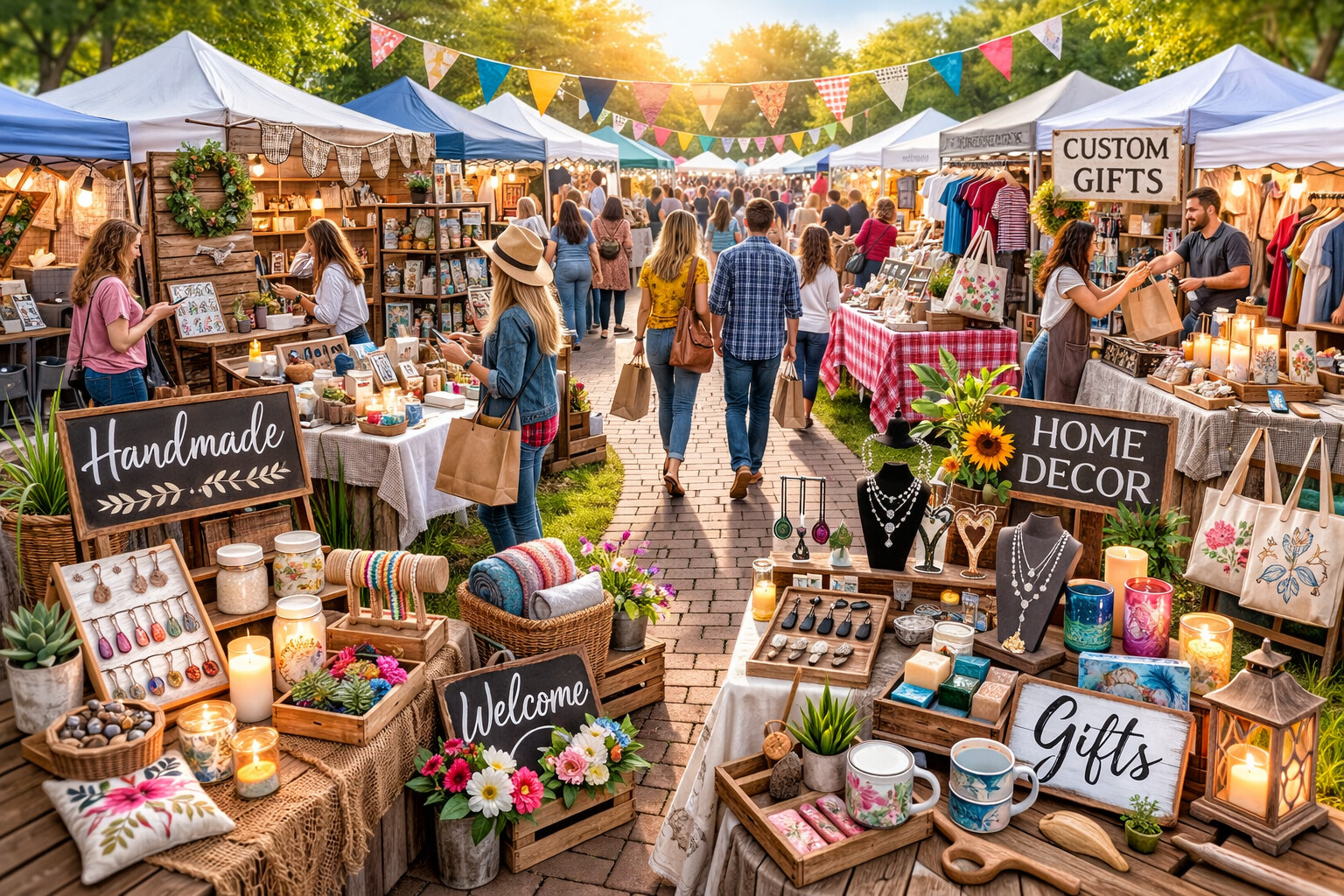
Craft markets can be a wonderful opportunity to showcase your creativity, connect with customers, and grow your small business. However, they can also be frustrating when you arrive only to discover that several other vendors are selling nearly identical products, sometimes even at lower prices. Recently, a few community members shared experiences where they paid booth fees only to find multiple vendors offering the same types of items. Situations like that can make it difficult to stand out and generate sales.
While no organizer can guarantee exclusivity in most markets, there are important questions you can ask ahead of time that may help you better understand the vendor mix and decide whether an event is the right fit for your products. A little preparation and communication can make a big difference.
Below are some best practices, questions to consider, and things to watch for when evaluating a craft market.
Start by Asking the Right Questions
When reaching out to an event organizer, it is perfectly reasonable to ask questions about the vendor lineup. Organizers often appreciate vendors who take their business seriously.
Consider asking questions such as:
- How many vendors will be participating in the event?
- Is there a limit on how many vendors can sell the same type of product?
- How do you curate or select vendors for the market?
- Do you try to maintain variety among vendor categories?
- What types of products are already represented?
- What is the expected attendance based on past events?
- Is there a vendor list from previous years I can review?
These questions help you understand whether the event prioritizes variety or if it operates more like an open market where similar vendors may be common.
Do Your Own Research
Even when you ask good questions, it is important to do a little research on your own.
Look at previous event photos on social media. Many organizers post pictures from past markets that can give you a sense of the vendor mix. Pay attention to whether you see many booths offering the same type of items. You can also check comments from vendors or attendees to see how they describe their experience.
If the event has been held before, try to find vendor tags or posts from prior years. This can help you identify what types of businesses typically participate.
Understand That Competition Is Inevitable
One important reality of craft markets is that competition will exist in some form. Even if you are the only vendor selling a specific item, customers may still compare prices with online options or retail stores.
Rather than focusing solely on avoiding competition, consider what makes your products unique. Your craftsmanship, presentation, story, and customer interaction can often set you apart even if someone else sells something similar.
Customers are frequently drawn to vendors who clearly care about their work and can explain the process behind it.
Consider How You Price Your Work
Another common frustration arises when vendors see similar items selling for significantly less. This can feel discouraging, especially if you have carefully calculated your costs.
Remember that pricing reflects many factors, including material quality, time invested, brand positioning, and experience. It is rarely helpful to engage in a race to the bottom on price. Instead, focus on communicating the value of your work.
Good signage, clear descriptions of materials, and a well-organized booth can help customers understand why your products are priced the way they are.
Best Practices When Communicating With Organizers
When reaching out to event organizers, always keep communication professional and respectful. They are managing many vendors and logistics at once.
Helpful practices include:
- Asking questions early, before submitting payment.
- Reading all vendor guidelines carefully.
- Responding promptly to organizer communications.
- Clarifying expectations about setup, booth size, and product categories.
Clear communication can prevent misunderstandings later.
Things to Avoid
There are also a few common mistakes vendors sometimes make when approaching craft markets.
Avoid assuming that organizers will guarantee exclusivity unless it is clearly stated in the vendor agreement. Most markets cannot realistically promise that only one vendor will sell a certain type of item.
It is also important not to approach organizers with complaints about other vendors once the event has already begun unless there is a clear violation of the event rules. At that point, the focus should remain on presenting your own products in the best possible way.
Finally, avoid applying to every market without evaluating whether the audience aligns with your products. A carefully chosen event is often far more successful than participating in many poorly matched ones.
Tips for Standing Out Even in a Crowded Market
Even when several vendors offer similar items, there are many ways to stand out.
Consider improving your booth presentation with thoughtful displays, lighting, and signage. Demonstrating your crafting process or sharing the story behind your work can also attract attention.
Packaging, branding, and customer engagement often make a lasting impression. A welcoming booth and friendly conversation can turn a casual browser into a loyal customer.
Final Thoughts
Craft markets are part strategy, part creativity, and part learning experience. Asking the right questions before committing to an event helps you understand what to expect and allows you to make more informed decisions about where to invest your time and money.
At the same time, every market provides an opportunity to observe trends, learn from other vendors, and refine your approach.
If you have participated in craft markets before, what questions do you typically ask organizers before signing up? What lessons have you learned that might help others in the community?
 I didn’t know these basic tip before I applied but now I do! Thank you ! Now I have been watching the vendor photos of previous ones and the ones they are showing for this market and I seem to be then Only 1 doing what I do I really haven’t seen any duplicate types of vendors except baked goods but they are even different types of baked goods!